


Bitcoin’s ownership is shifting. More BTC sits with long-term holders, funds, and larger allocators, yet most of it remains idle, with limited ways to deploy it productively onchain without taking on additional trust trade-offs. Alea Research has published Threshold 2025 Benchmark Report that takes a data-driven look at how tBTC is performing across supply, DeFi utilization, liquidity depth, and fee dynamics.
This Benchmark is built to help our community interpret the right signals. Builders, LPs, lenders, token holders, and ecosystem partners can use it to understand where adoption is strengthening, where revenue is coming from, and which metrics will define the next phase of growth.
The Q4 data present a nuanced but constructive picture. Supply cooled after the Q3 peak, declining 7% quarter over quarter, but it remains up 27% year over year at roughly 5.9k tBTC. Even more important, DeFi TVL increased to 4.9k BTC, up 27% QoQ and 65% YoY. This indicates that a higher share of outstanding tBTC is being deployed in DeFi venues rather than sitting idle.
Liquidity depth across venues remains strong. Approximately $427M of tBTC was deployed across DeFi protocols at quarter end, nearly flat QoQ and up 55% YoY.
Annualized fees and protocol revenue reached a $1.4M run rate, up 30% QoQ.
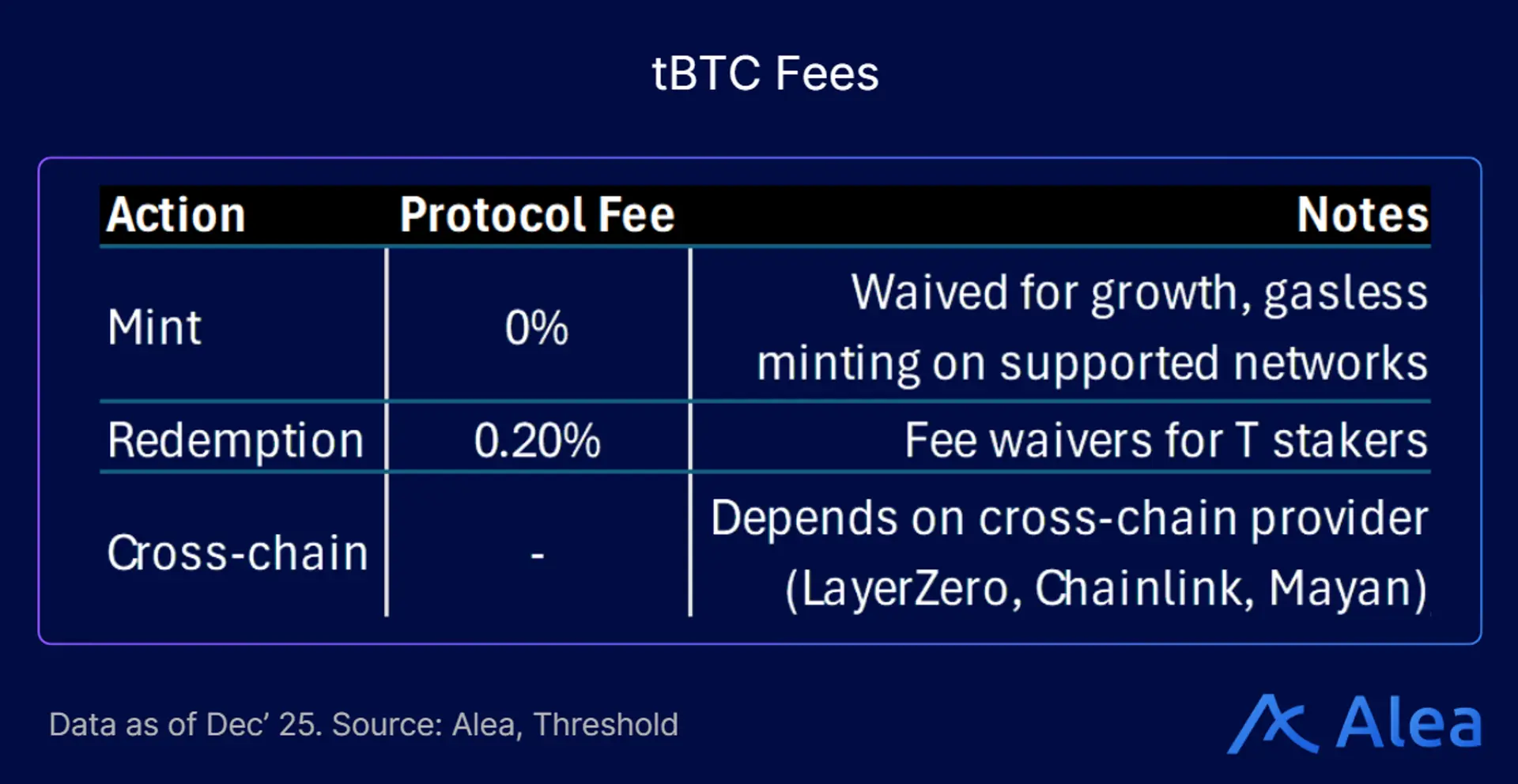
Because fees are currently driven by the 0.2 percent redemption fee, revenue reflects flow activity and redemption volume, not just raw supply growth. Understanding that distinction is critical for anyone evaluating long-term sustainability.
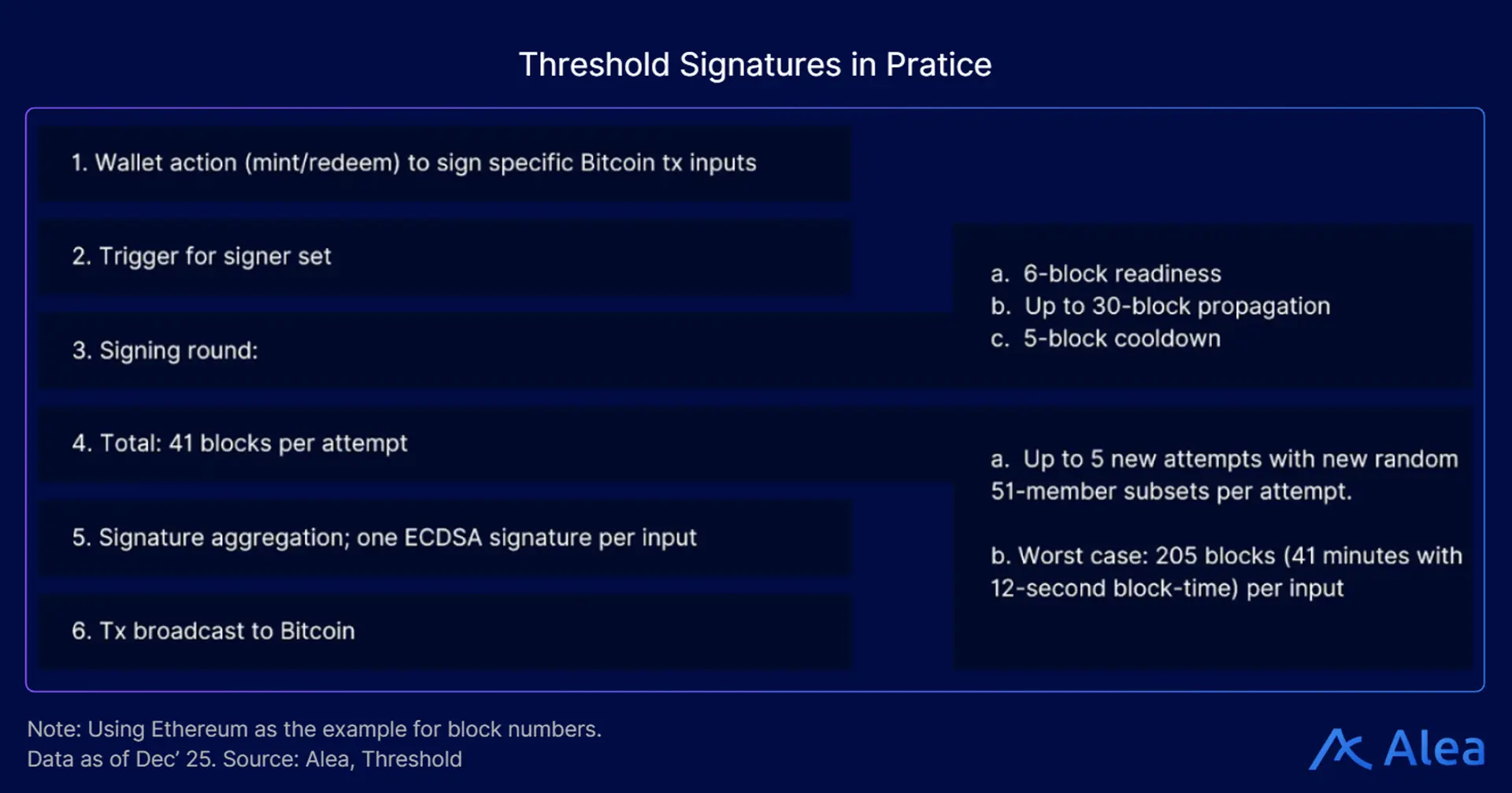
For those new to the ecosystem, Threshold issues tBTC, a 1:1 BTC-backed asset secured by threshold ECDSA across a rotating set of signers with additional safeguards. Minting locks BTC and issues tBTC, while redemption burns tBTC and releases BTC. Mint fees are currently waived to prioritize adoption, while redemption fees fund protocol revenue, buybacks, and the treasury at the DAO’s discretion.
tBTC: Adoption, deployment, and liquidity concentration
The Benchmark Report zooms in on whether tBTC is becoming more usable and more integrated in the venues that matter most.
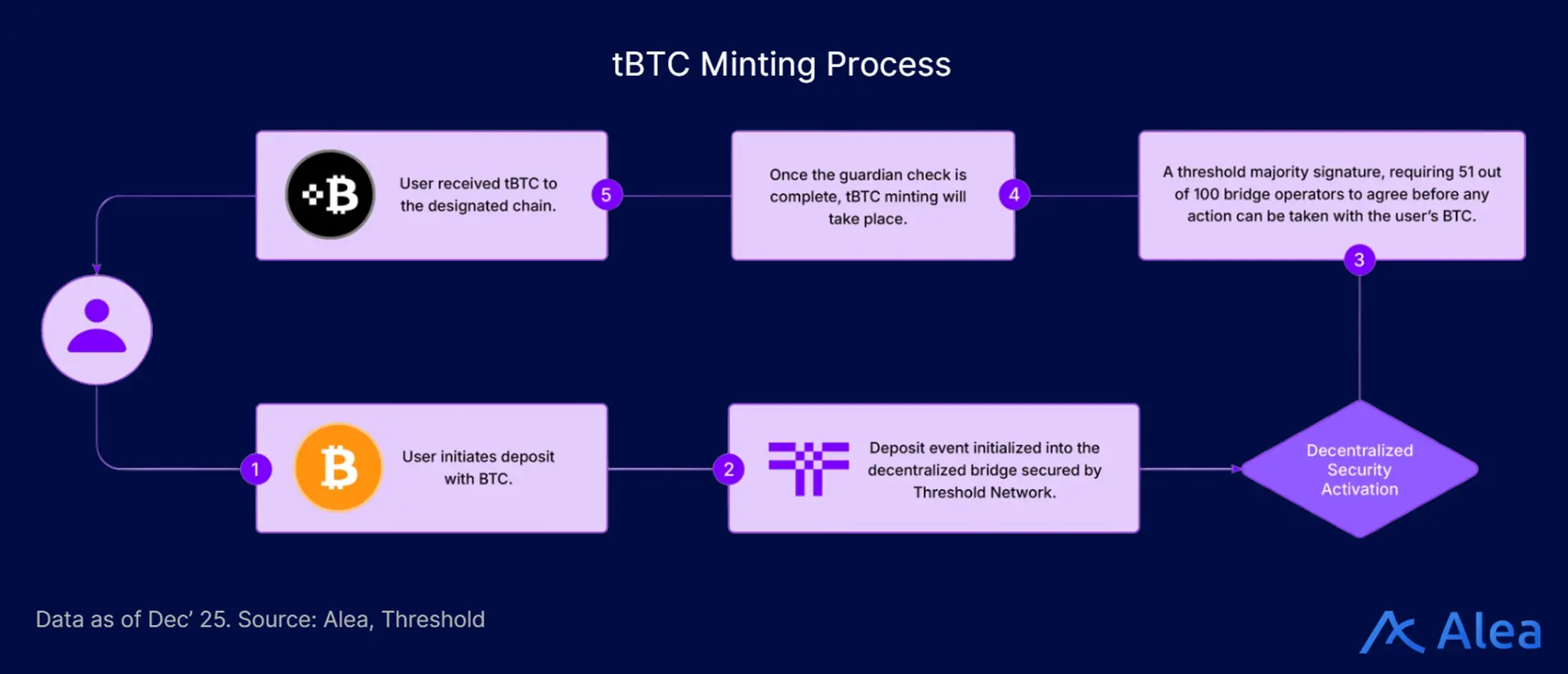
tBTC ended Q4 at approximately 5.9k supply, demonstrating resilience despite BTC price volatility. The strategy remains clear: deepen liquidity and collateral utility on Ethereum mainnet first, then expand across additional chains in a measured way.
The updated app experience, including direct minting to supported chains, direct redemption back to the Bitcoin mainnet, and gasless minting on supported networks, is designed to reduce onboarding friction and increase conversion of BTC holders into active tBTC users.
Today, supply remains highly concentrated on Ethereum, with meaningful allocations in major venues such as Aave and Curve. This concentration provides deep liquidity and strong collateral positioning, while cross-chain expansion continues to grow flow and distribution over time.
For anyone tracking Bitcoin’s onchain evolution, this Benchmark offers a clear snapshot of where liquidity stands, how product-market fit is developing, and which metrics will define the next leg of growth.
Dive deeper into the data and explore the full Benchmark Report:


