.png)
Adoption is easiest to measure when it shows up on the balance sheet. In June, Abra shifted from WBTC to $tBTC, as the main BTC collateral for its Bitcoin-backed lending platform, one of the clearest signals yet that institutional preference is consolidating around tokenized Bitcoin that can be verified onchain. The data told the same story from a different angle: tBTC's DeFi TVL-to-FDV multiple reached 7.4 in Q1 2026, up 228% year over year, while Verifiable Bitcoin Accounts (VBA) continue to meet institutional standards.
Here's the full recap of the month.
Highlights
- Abra completed its shift from WBTC to tBTC, making verifiable collateral the foundation of its Bitcoin-backed lending platform.
- tBTC's DeFi TVL-to-FDV multiple climbed from 6.5 to 7.4 in Q1 2026, up 13% quarter over quarter and 228% over the past year.
- Lightning to tBTC is now one click on DZap, with Boltz live on the aggregator to bridge BTC from the Lightning Network directly to tBTC on Arbitrum.
Full details to each highlight on the sections below.
Ecosystem Growth
Verifiable Bitcoin Accounts bring the Bitcoin-level integration path into focus
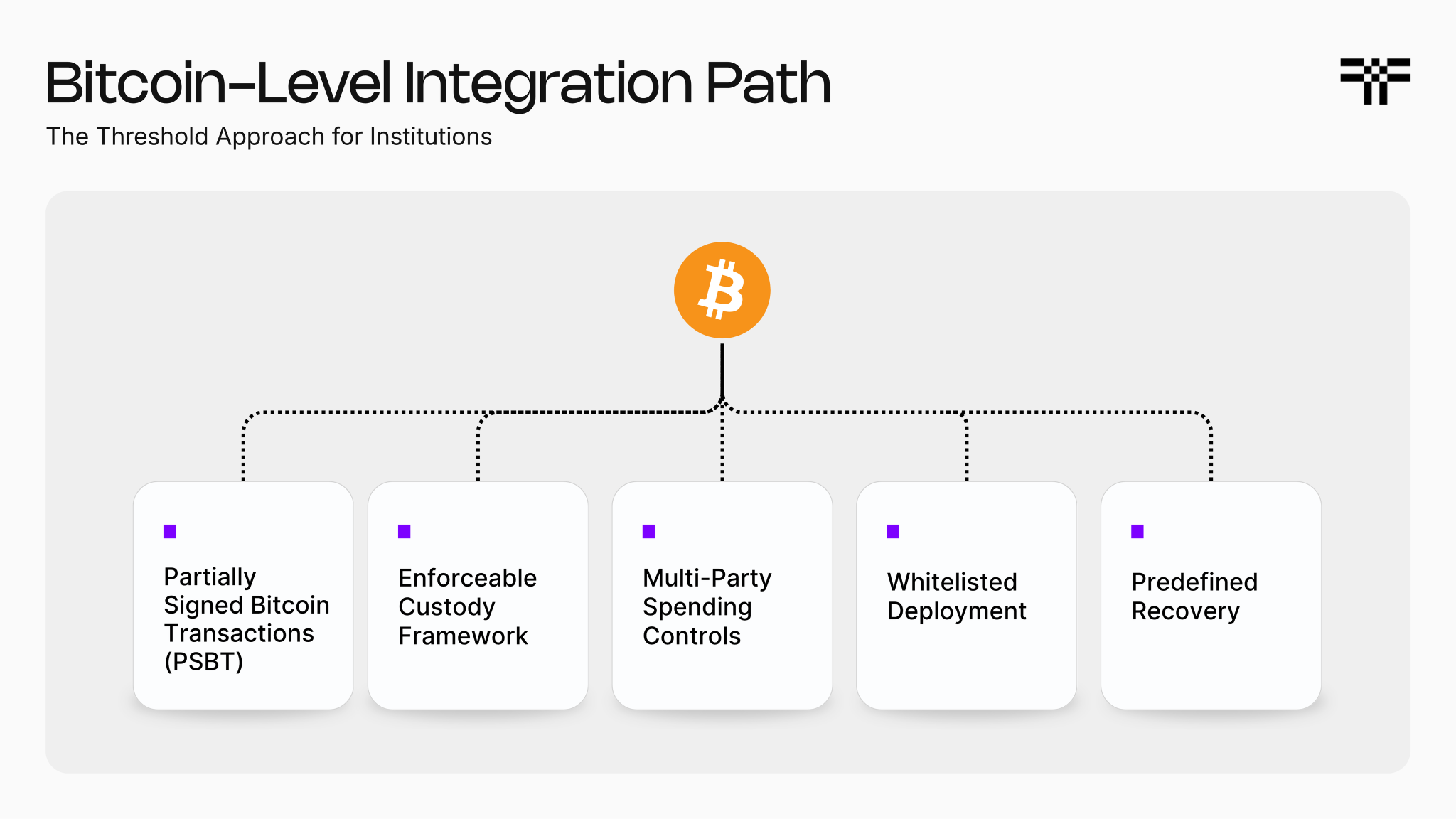
Verifiable Bitcoin Accounts rollout continues with a look at its Bitcoin-level integration path, detailing how the design connects to the infrastructure institutions already operate: Bitcoin stays with the institution's existing Qualified Custodian, so adoption requires no change in custody arrangements and integrates seamlessly into the institution's existing compliance structure.
The enforcement layer is what separates the design from conventional arrangements:
- Recovery paths are enforced by Bitcoin Script and Bitcoin consensus rather than by counterparty promises.
- A time-locked withdrawal executes when a specified time period has elapsed.
- Bitcoin UTXO remains the system of record throughout.
Threshold also posted a rundown of Verifiable Bitcoin Accounts FAQs, walking institutions through the basics of how VBAs resolve common tensions in onchain Bitcoin deployment. For institutional teams, the integration path turns an architectural argument into a checklist they can hand to their custody and compliance functions.
Abra moves its Bitcoin-backed lending to tBTC
The month's defining integration came from Abra, which completed its migration from WBTC to tBTC as the preferred collateral base for its Bitcoin-backed lending platform. Abra's borrowers pledge Bitcoin they intend to keep, which makes the quality of the collateral asset the product itself.
The platform serves high-net-worth individuals and institutions across wealth and treasury management, giving clients an edge in trading and collateralized borrowing while segregated account infrastructure keeps them in full control of their assets. The choice of collateral says as much as the integration itself. Platforms carrying fiduciary duties to their clients are re-examining how wrapped Bitcoin is designed, and Abra's move fits squarely within that shift.
tBTC deepens its position across lending markets
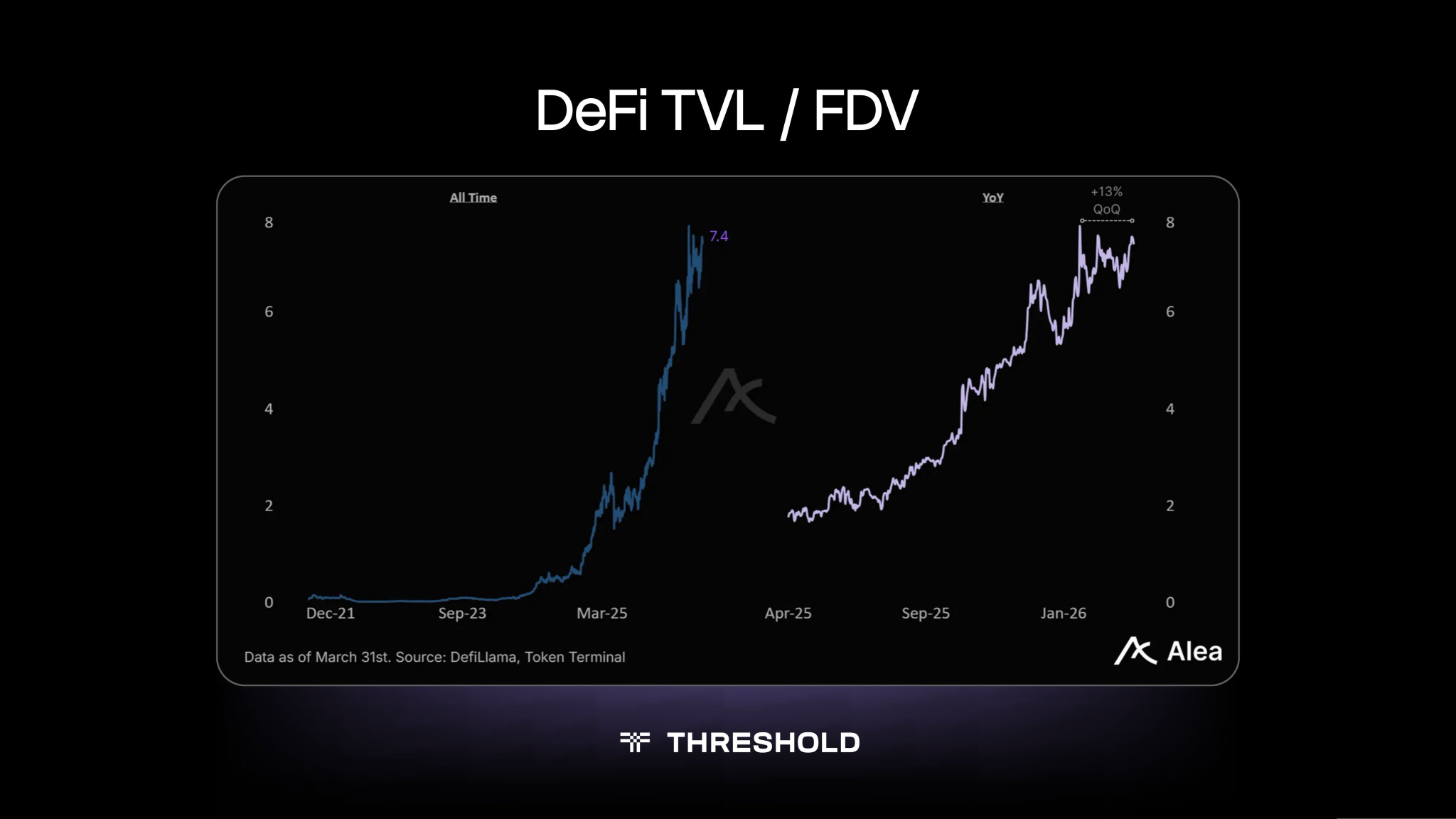
The on-chain data showed the same trend as Abra's decision. tBTC's DeFi TVL to FDV multiple climbed from 6.5 to 7.4 in Q1 2026, up 13% from the prior quarter and 228% over the past year. The multiple is a cleaner read than raw TVL because it strips out price noise and isolates utility. Flows into DeFi have grown in the double digits in $BTC terms every quarter since Q3 2025, a streak that predates the current drawdown and has continued through it.
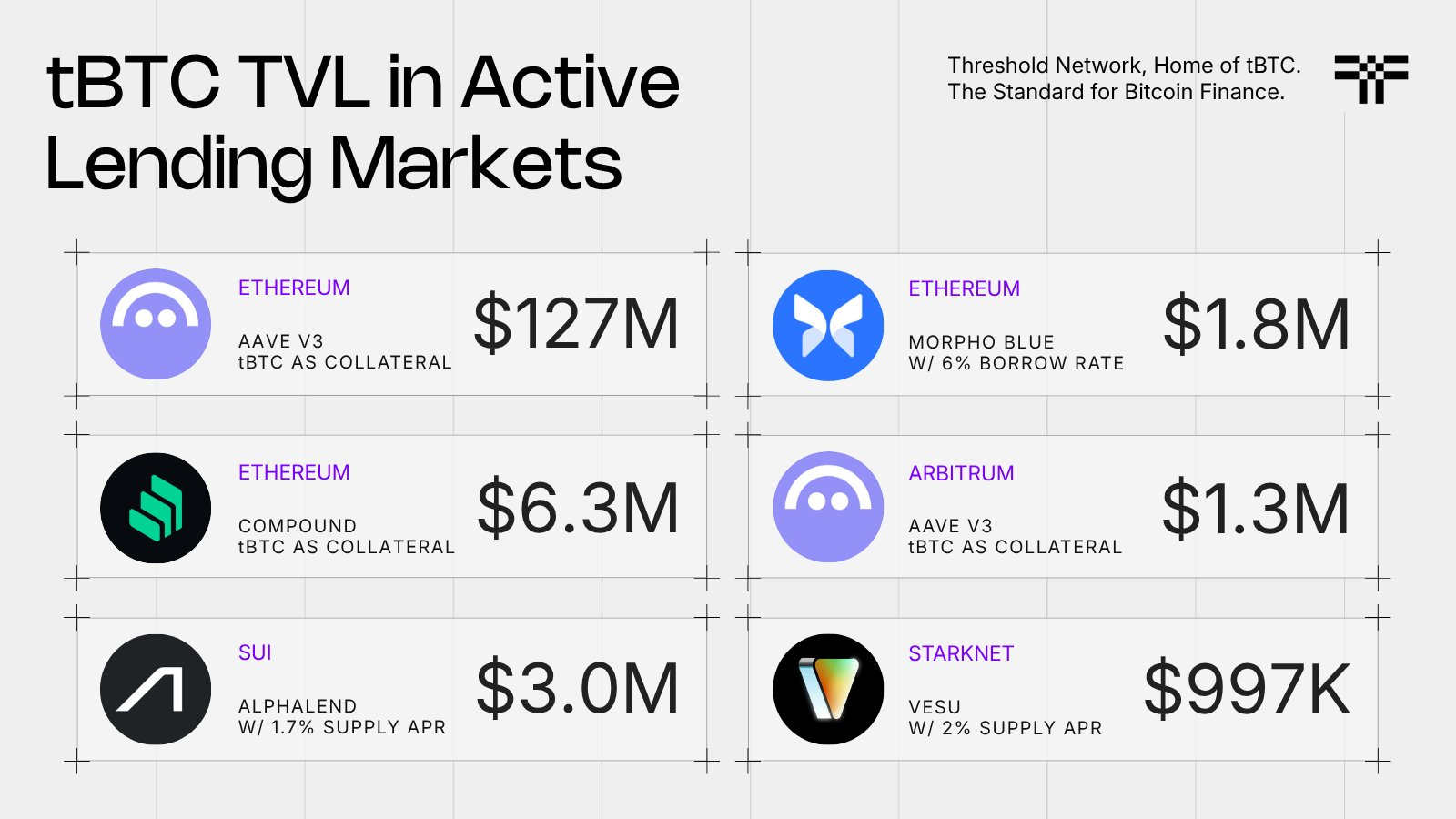
The distribution of that growth tells the institutional story. Per Alea Research's latest BTCFi snapshot, Aave V3 alone holds $138M in tBTC, representing 29% of tBTC's DeFi TVL and the single largest driver of BTC-denominated growth, with supplied collateral up 24% quarter over quarter. Curve and YieldBasis join it at the top, and together the leading venues account for roughly 57% of all tBTC deployed in DeFi. Depth concentrated in proven protocols is what allocators screen for, and it's where tBTC's liquidity sits.
Multi-chain swap simplifies the path into tBTC
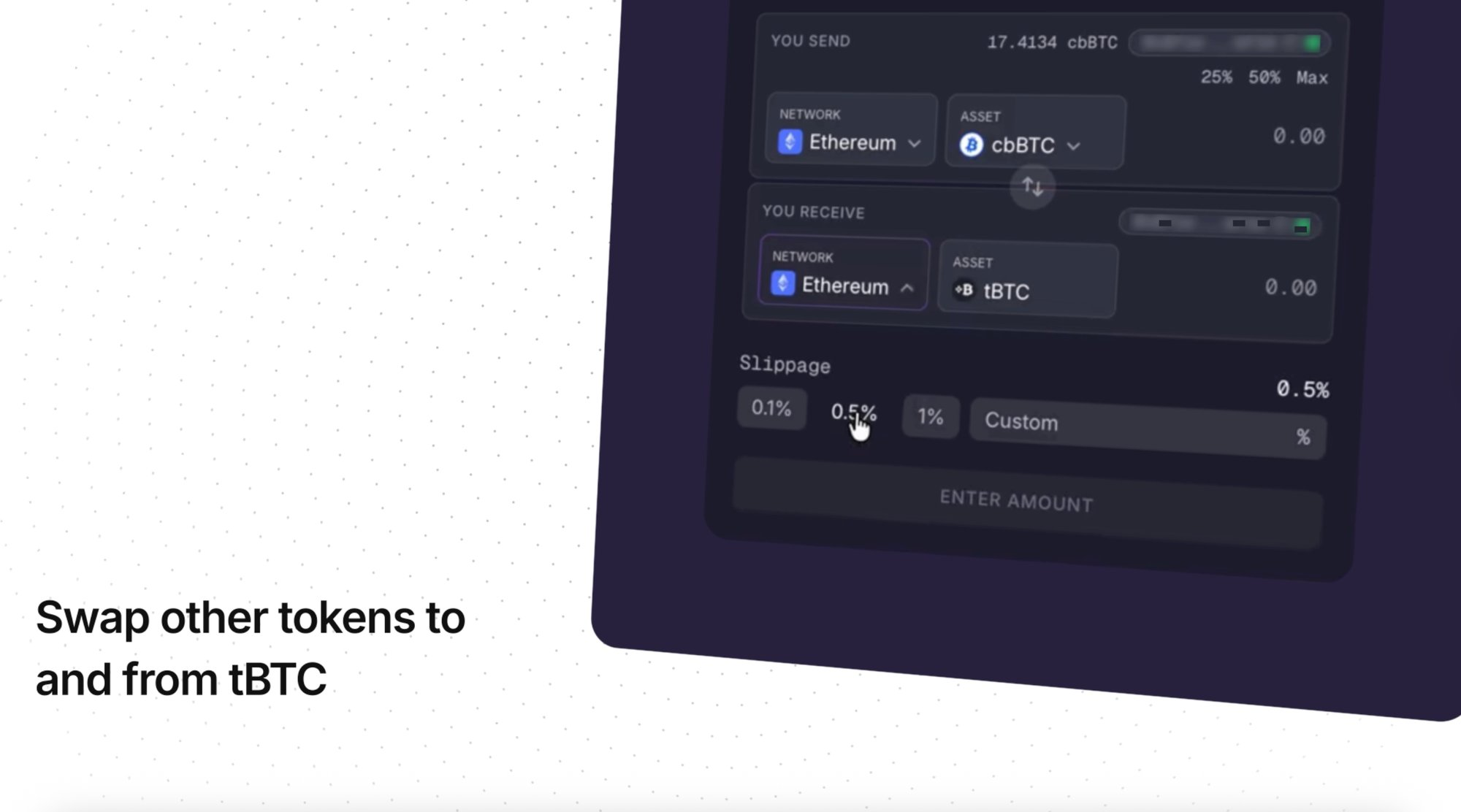
The multi-chain swap stands as one of the foundational entry points to tBTC and the Bitcoin Economy. Holders of other tokenized BTC can convert to tBTC with a single swap, either through the Threshold App or on external venues such as Uniswap, Curve, and Portal Bridge.
The Threshold Bitcoin Router ties the experience together by unifying positions across all supported networks in a single view. A portfolio spread across chains reads as a single balance, removing the accounting friction that multi-chain deployment usually entails. For users already holding tokenized Bitcoin elsewhere, the distance between where they are and where they want to be is now one transaction.
Boltz goes live on DZap, connecting Lightning to tBTC in one click
The path from Bitcoin's payments layer to its DeFi layer got shorter in June. Boltz, the non-custodial swap protocol supporting Bitcoin, Lightning, and tBTC, is now live on DZap, letting users bridge BTC from the Lightning Network directly to tBTC on Arbitrum in a single click. Boltz natively supports atomic swaps between Lightning and tBTC on Arbitrum, meaning both legs of the trade either complete together or fail entirely, with no party able to default after receiving assets.
For Lightning users, that turns tBTC into the shortest trust-minimized distance between holding sats and deploying Bitcoin in DeFi. For Threshold, every aggregator surface that routes through tBTC widens the funnel into the Bitcoin Economy, confirming a pattern worth noting: the tBTC-on-Arbitrum architecture Boltz built is being adopted by other builders, with DZap's integration extending that reach to its aggregation audience.
Community and Events
John Packel joins Bitcoin for Corporations in NYC
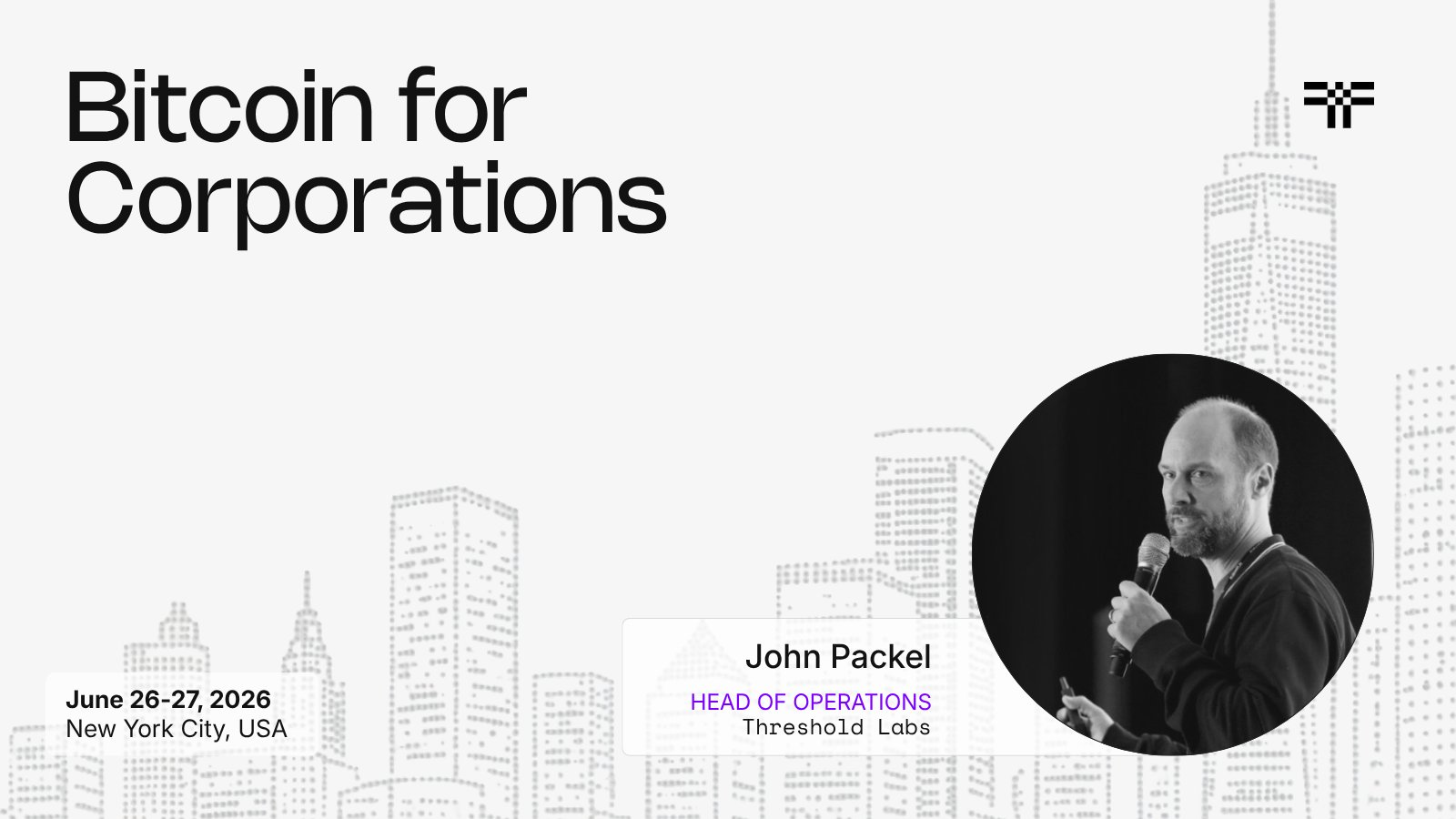
Threshold Labs Head of Operations John Packel took part in Bitcoin for Corporations, an invitation-only forum held in New York City. The room brought together corporate treasury and capital markets professionals working through a shared question from different angles: how to put Bitcoin to work without compromising on custody or compliance.
Threshold Forum opens discussion on a Protocol as Arbitrageur model
Governance attention in June turned to the economics of peg maintenance, with a new proposal on the Threshold Forum recommending that the RebateStaking contract be replaced by a Protocol as an Arbitrageur model. The existing contract underpins the fee waiver framework, which reduces redemption friction for $T Stakers are improving arbitrage efficiency and supporting a tighter BTC-to-tBTC spread. The design has performed as intended, yet it depends on external participants to execute the arbitrage that maintains price alignment, with the value from closing the spread accruing to those participants while the protocol absorbs the cost through foregone fee revenue.
The proposed model would consolidate that function within the protocol itself, conducting the peg-maintaining arbitrage directly rather than subsidizing third parties through rebates, and retaining the associated value in the process. The proposal is under open discussion on the Threshold Forum, where review by tokenholders and contributors determines which proposals advance to a formal vote. Participation ahead of any vote is open to all.
Looking Ahead
June's throughline was institutional conviction backed by verifiable data, and the months ahead extend each of these threads: Q2 closes with fresh on-chain data to test whether the growth streak holds through a fifth quarter. The Protocol as Arbitrageur discussion advances through the forum, an example of the network reviewing its own economics in the open. Institutional conversations of the kind John Packel joined in New York continue to seed the evaluation pipelines that produce integrations like Abra's, and the Verifiable Bitcoin Accounts series keeps meeting diligence teams at each stage of that process.
The direction has been consistent for six years, and it remains so now: Bitcoin's utility expands onchain, and Threshold builds the infrastructure that lets institutions verify it rather than take it on trust.
Subscribe to the Threshold Network newsletter for product releases, ecosystem updates, research docs and more.
.png)