.png)
Bitcoin ownership is consolidating. At the same time, deploying BTC onchain still forces trade-offs institutions are unwilling to accept: pooled custody, opaque risk, or reliance on trusted intermediaries. Alea Research’s Threshold 2025 Benchmark Report cuts through that noise with a data-driven view of how tBTC is actually performing across supply growth, DeFi utilization, liquidity depth, and fee generation.
This benchmark helps builders, Liquidity Providers, lenders, token holders, and ecosystem partners identify where adoption is compounding, where real revenue is emerging, and which metrics will define the next phase of Bitcoin’s on-chain expansion.
Q4 presents a more nuanced, but ultimately constructive, picture.
Supply cooled after its Q3 peak, declining 7% quarter over quarter. Still, it remains structurally higher, up 27% year over year to ~5.9k tBTC. More importantly, utilization is moving in the right direction. DeFi TVL rose to 4.9k BTC, up 27% QoQ and 65% YoY, signaling that a larger share of tBTC is being actively deployed rather than sitting idle.
Liquidity across venues continues to hold firm. Around $427M of tBTC was deployed across DeFi protocols at quarter end, roughly flat QoQ, but up 55% YoY. At the same time, annualized fees and protocol revenue reached a $1.4M run rate, growing 30% QoQ.
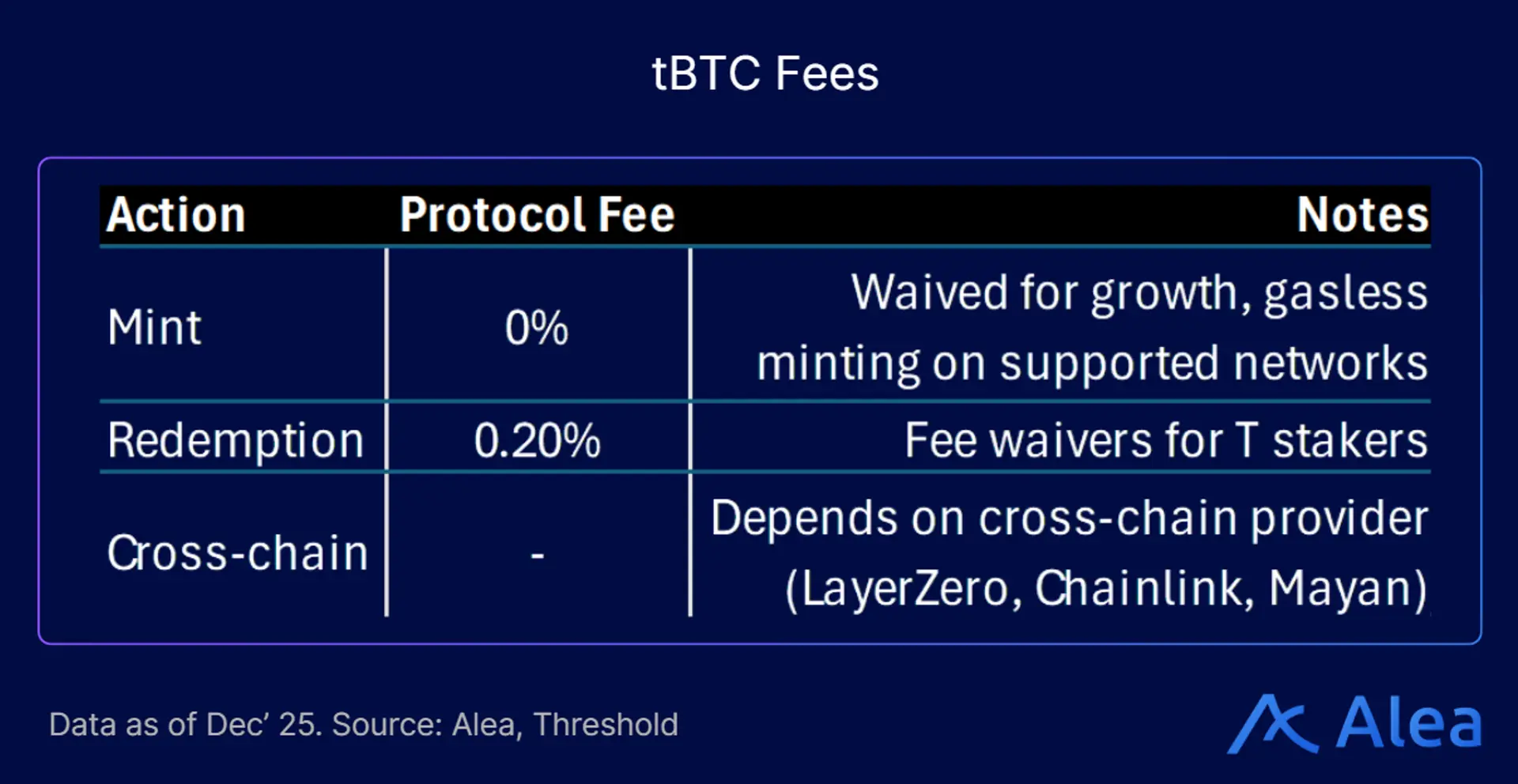
It’s important to understand what’s driving that revenue. Today, fees are primarily generated through the 0.2% redemption fee, meaning revenue reflects flow and redemption activity, not just headline supply growth. That distinction matters when assessing long-term sustainability.
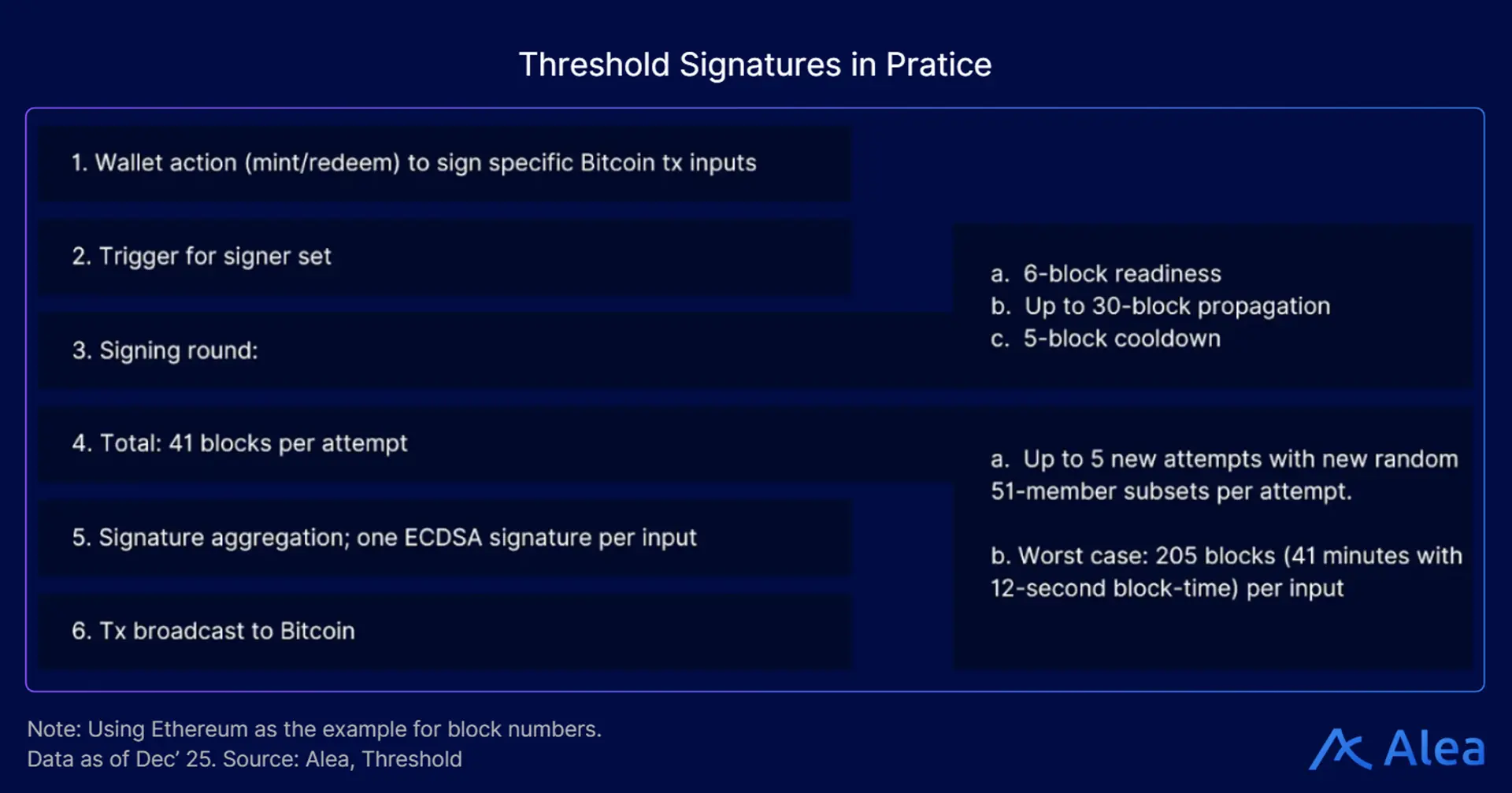
For those newer to the ecosystem: Threshold issues tBTC, a 1:1 BTC-backed asset secured by threshold ECDSA across a rotating signer set with additional safeguards. BTC is locked to mint tBTC, and burned to redeem it. Minting fees are currently waived to accelerate adoption, while redemption fees fund protocol revenue, buybacks, and the DAO treasury.
tBTC: Adoption, deployment, and liquidity concentration
The Benchmark Report focuses on a single question: is tBTC becoming more usable, and more deeply integrated in the venues that actually matter?
tBTC closed Q4 at ~5.9k supply, holding steady despite broader BTC price volatility. The direction is deliberate, prioritize depth before breadth. Liquidity and collateral utility are being strengthened on Ethereum mainnet first, establishing a solid foundation before expanding to additional chains in a measured, demand-driven way.
At the same time, the product experience is evolving to remove friction at every step. The updated app introduces direct minting to supported chains, seamless redemption back to Bitcoin mainnet, and gasless minting on select networks. The goal is simple: reduce onboarding complexity and convert more BTC holders into active, on-chain participants.
Today, supply remains concentrated on Ethereum, with significant allocations across core venues like Aave and Curve. This concentration anchors deep liquidity and reinforces tBTC’s role as high-quality collateral, while measured cross-chain expansion continues to broaden distribution and flow over time.
For anyone tracking Bitcoin’s on-chain evolution, this Benchmark offers a clear, grounded view of where liquidity is consolidating, how product–market fit is emerging, and which metrics will define the next phase of growth, underscoring how tBTC is establishing strong product–market fit within Bitcoin’s emerging on-chain financial system.
Access the full Q4 2025 Report by Alea Research
.png)
.png)