Threshold Network’s tBTC can now be accepted on EigenLayer, making it the first incentivized Bitcoin asset on EigenLayer. This solidifies tBTC as a critical player in Bitcoin staking and the broader BitcoinFi landscape.
Get started today: https://app.eigenlayer.xyz/token/tBTC
Bitcoin has had a busy year, fueled by the historic launch of the Bitcoin ETF and growing interest in Bitcoin L2s. EigenLayer’s support for tBTC deposits is yet another catalyst for BTC, giving Bitcoin holders more ways to earn yield.
Although EigenLayer's TVL has declined by nearly 50% since its June peak, extending support to BTC staking can help reignite the narrative, with tBTC at the center.
Threshold DAO is providing a pool of $45k in T token incentives for the first 3 months for users who restake their tBTC with EigenLayer.
What tBTC on EigenLayer Means for Economic Security
Restaking tBTC on EigenLayer offers a unique way to increase the economic security of decentralized applications.
The best way to understand this is to look back at tBTC’s v1 model, which relied on over-collateralization to provide a secure bridging process. Users would be required to post a bond in excess of the value they were bridging. Any attempt to steal bridged funds would result in a net loss because the bond was worth more.
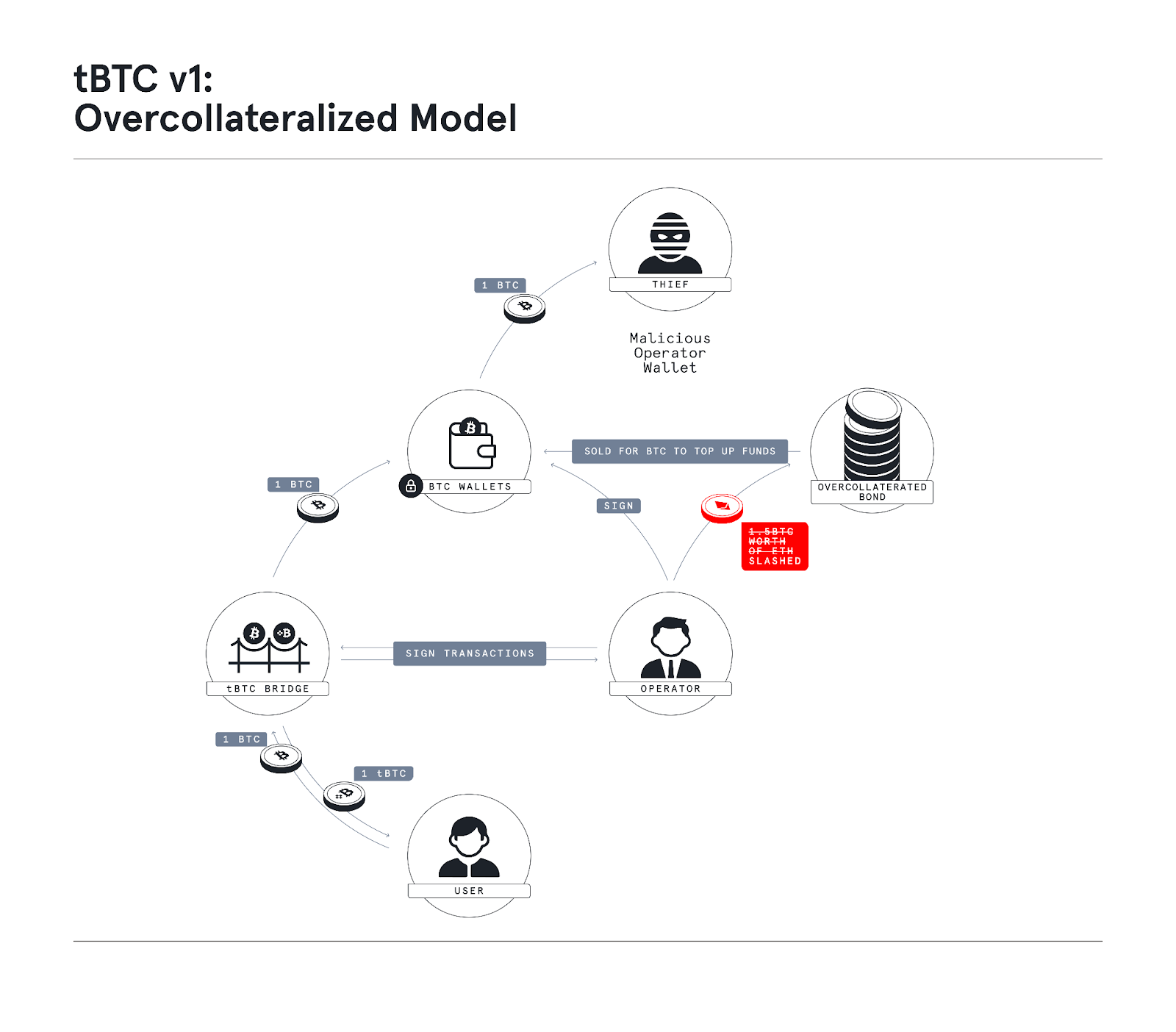
With EigenLayer, users can “restake” assets like stETH (staked ETH, aka ETH posted as a bond) to secure a range of decentralized applications on an opt-in basis.
Using tBTC on EigenLayer lets users leverage Bitcoin’s value to secure additional apps, boosting security with latent economic value.
In this model, Bitcoin holders can actively contribute to the security of multiple protocols while earning yield, all with the most decentralized and secure tokenized Bitcoin.
Restaking tBTC: Generating Yield and Securing Applications
One of the most exciting aspects of restaking tBTC on EigenLayer is the opportunity for Bitcoin holders to earn a yield on their holdings. While Ethereum’s staking ecosystem has provided a “risk-free” yield through Lido’s stETH, such options have been limited for Bitcoin—until now.
Alongside other Bitcoin staking projects like Babylon, Lombard, and Acre, EigenLayer affirms the case for Bitcoin restaking as a growing part of the Bitcoin economy.
Other platforms have already shown a strong demand for yield-generating Bitcoin products, highlighting the desire among Bitcoin holders for opportunities to earn on their BTC.
With tBTC now available on EigenLayer, Bitcoin holders have a new way to generate yield while contributing to app economic security.
tBTC: Leading the Way in Bitcoin Restaking
tBTC has had an active month being added to new DeFi protocols and direct minting on Arbitrum, and its addition to EigenLayer is an important catalyst for the growth of Bitcoin restaking.
Discover all tBTC yield and DeFi opportunities on the Threshold App.
.png)