.png)
August focused on strengthening the platform’s security and infrastructure; including a refreshed site look for tbtc.network, and an expanding body of work around Verifiable Bitcoin Accounts designed for institutional Bitcoin lending desks, and asset managers. Both initiatives share a common principle: preserving verifiability of the underlying asset through segregated accounts, while enabling capital to access onchain markets.
Highlights
- Threshold reached a significant milestone in August, surpassing 30,000 tBTC minted since inception.
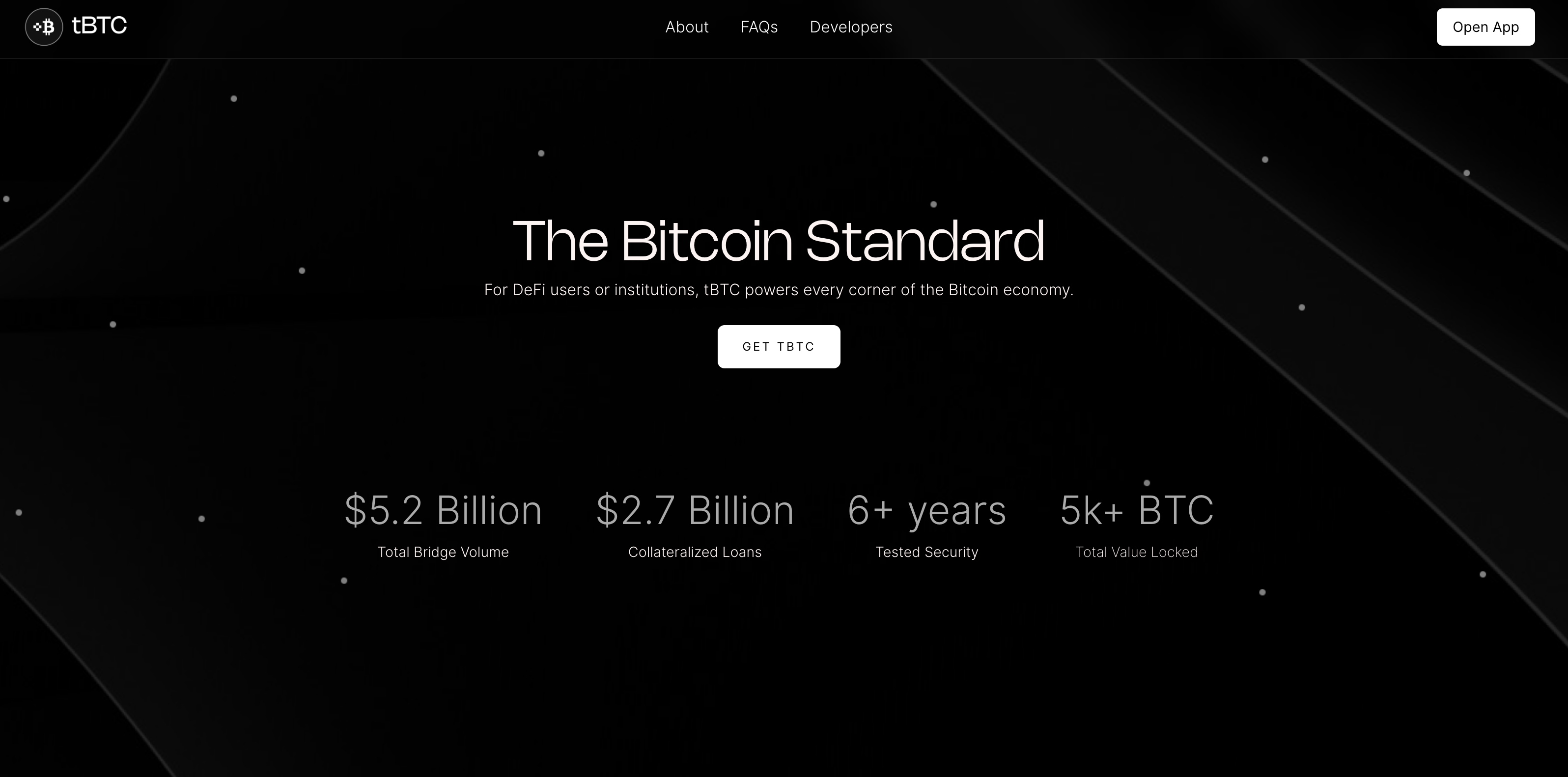
- tbtc.network got a fresh new look, the sitehas been updated based on the recent protocol updates, in-line with the brand directives.
- Threshold opened a new series on institutional Bitcoin, starting with why verifiable custody changes what happens when Bitcoin moves from a treasury asset to collateral.
- Internal restructuring sharpened the focus on platform resilience, prioritizing critical bug fixes and strengthening infrastructure against AI enabled attacks and emerging security threats.
- Development efforts expanded around FROST and Schnorr signatures, advancing Threshold’s cryptographic infrastructure and security architecture.
Milestones
In August, Threshold reflected on roughly six years of building. The original goal was to make Bitcoin usable in DeFi without a centralized custodian or a single point of failure, and more than $5B in bridge volume has moved through tBTC since. That figure is evidence that threshold cryptography works as a permissionless way to hold Bitcoin while putting it to use onchain.
The protocol also crossed 30,000 tBTC mints. Each unit stands for real 1:1 Bitcoin brought onchain, on a supply anyone can verify. Supply grew 32% year over year, held largely on Ethereum where onchain liquidity is concentrated, with redemption to native Bitcoin kept direct.
Ecosystem Growth
Verifiable Bitcoin Accounts tied held Bitcoin to onchain lending. A holder's Bitcoin stays in segregated custody, held apart from other holdings and open to verification at any time, while that position reaches lending venues like Aave and Morpho. Control stays distributed and the position stays provable onchain, so Bitcoin can back a loan without its funds being commingled.
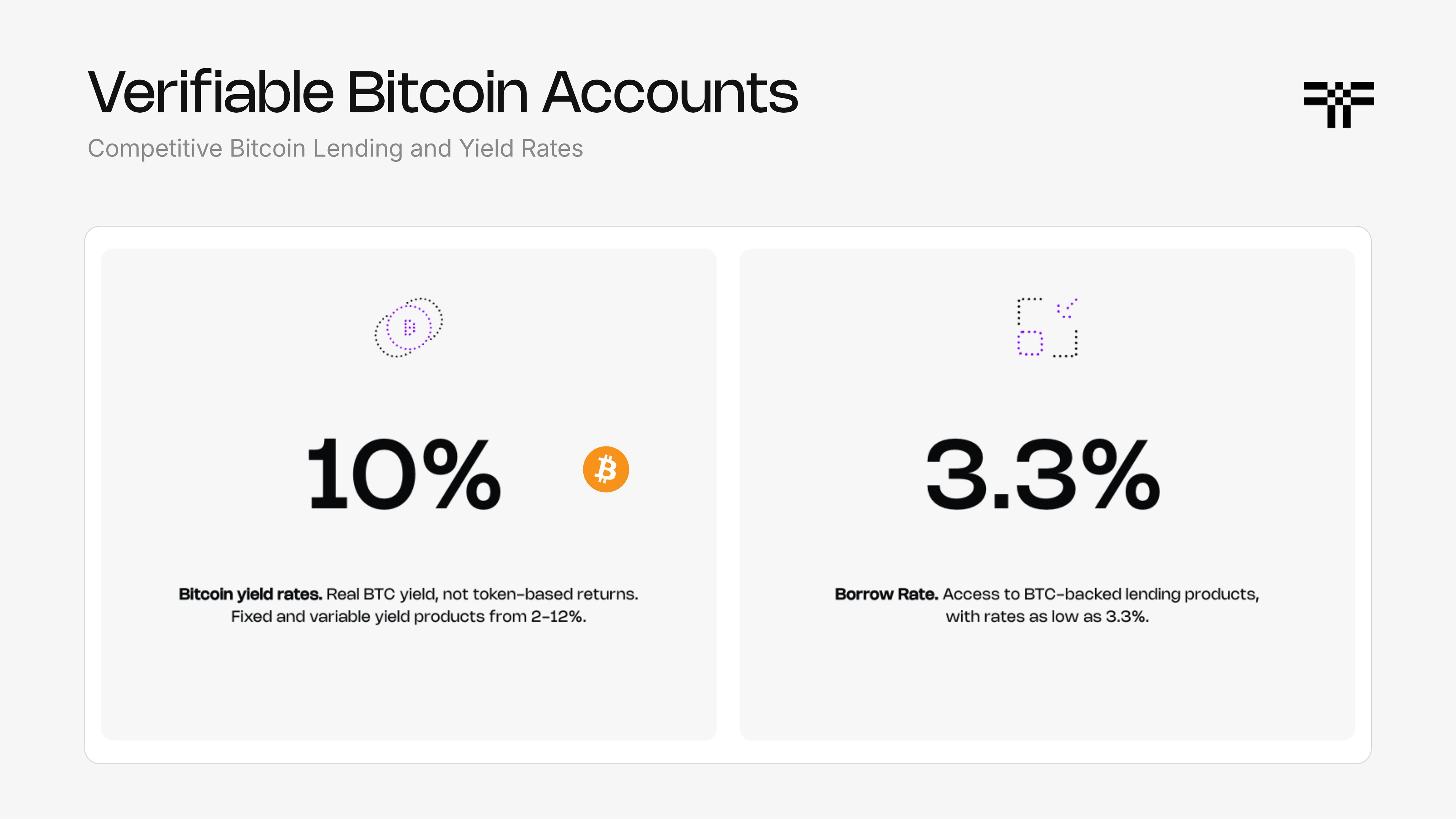
For lending desks, the same accounts open a route to working capital without moving off an existing custody setup. A desk can borrow stablecoins against its Bitcoin and deploy them across strategies, while the collateral position stays auditable on the Bitcoin network.
Product Updates
Threshold has been signaling its transition toward Schnorr signatures, FROST/ROAST since 2023. While the direction remained consistent, several network priorities took precedence along the way, including T staking upgrades, UI and UX improvements, gasless minting, the reinstatement of minting fees and broader protocol maintenance.
This year, development has moved firmly into execution, with FROST now an active engineering priority. The work represents an important step toward improving signer scalability, making signing failures attributable and strengthening the security and resilience of the tBTC bridge.
Security Hardening and Infrastructure Resilience
August placed greater emphasis on strengthening tBTC at the infrastructure level, with engineering resources concentrated on critical bug fixes, operational resilience and security hardening against increasingly sophisticated attack vectors. This continues Threshold’s long standing security first approach to tBTC, particularly as the bridge develops into infrastructure capable of supporting larger volumes of Bitcoin and more demanding institutional use cases.
Advancing FROST and Schnorr for tBTC
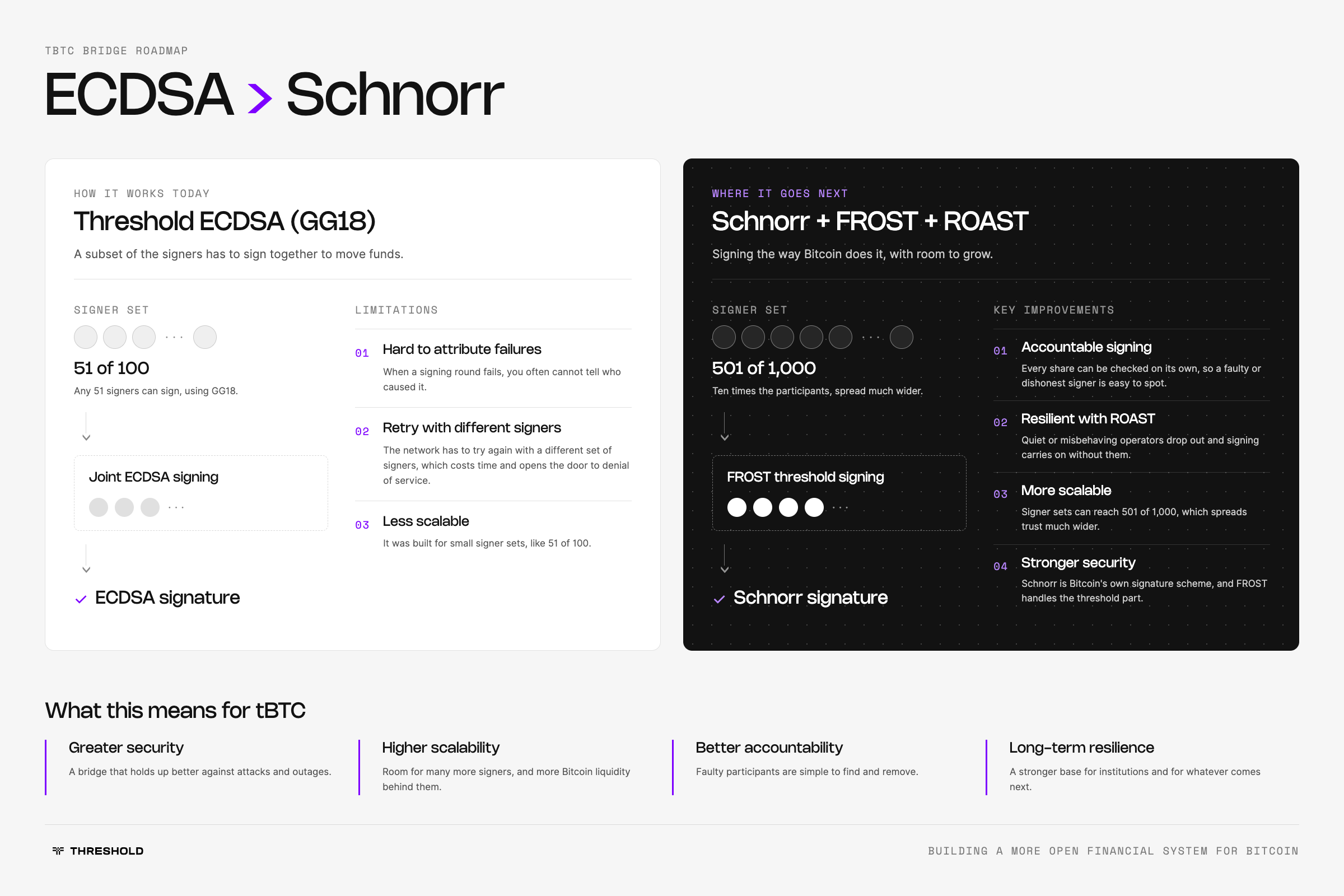
Development also progressed around FROST and Schnorr signatures. The proposed architecture replaces the bridge’s existing threshold ECDSA approach with Bitcoin native Schnorr signatures, using FROST for threshold signing and ROAST to maintain reliable signing when individual participants are unavailable or behave incorrectly.
For tBTC, the significance is substantial. In reference to the previous update here, FROST enables individual signature shares to be verified, making faulty or malicious signers identifiable, while ROAST provides a mechanism for excluding unresponsive or misbehaving participants and continuing the signing process with responsive operators.
Threshold has also previously described FROST and ROAST as a path toward expanding tBTC wallets from the current 51 of 100 model toward 501 of 1,000, substantially increasing the potential signer population while retaining accountability for signing errors and aborts. In practical terms, the upgrade is intended to make the bridge more scalable, more resistant to disruption and easier to secure as tBTC supports greater amounts of Bitcoin.
Looking Ahead
On the protocol side, continued development of FROST/ROAST and Schnorr signatures will remain an important part of strengthening the bridge. The objective is to support a larger and more distributed signer set, improve accountability when signing failures occur and increase resilience as more Bitcoin moves through tBTC.
On the adoption side, Threshold will continue building around institutional Bitcoin use cases, particularly where verifiable ownership, segregated custody and access to onchain liquidity intersect. As tBTC grows beyond 30,000 cumulative mints and more than $5 billion in historical bridge volume, the focus ahead is not simply on increasing adoption. It is on ensuring that growth is supported by stronger security, verifiable infrastructure and products designed for increasingly sophisticated Bitcoin holders.
Follow for upcoming updates and releases, and explore onchain Bitcoin deployment through the Threshold App.

.png)
